



Travelling Sprinklers for Flexible Irrigation on Sports Turf and Managed Grounds
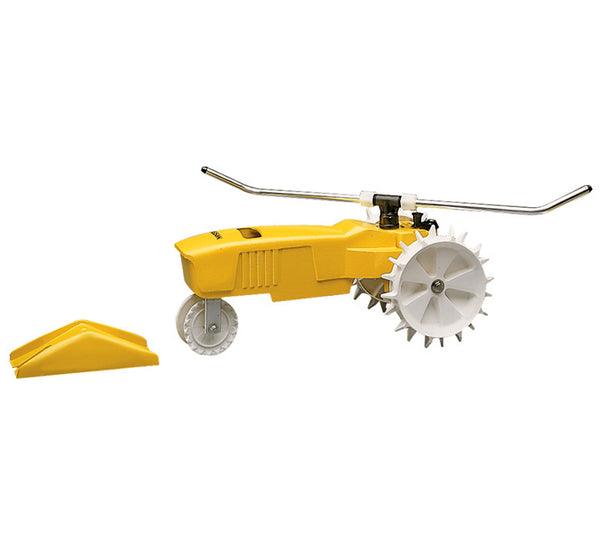
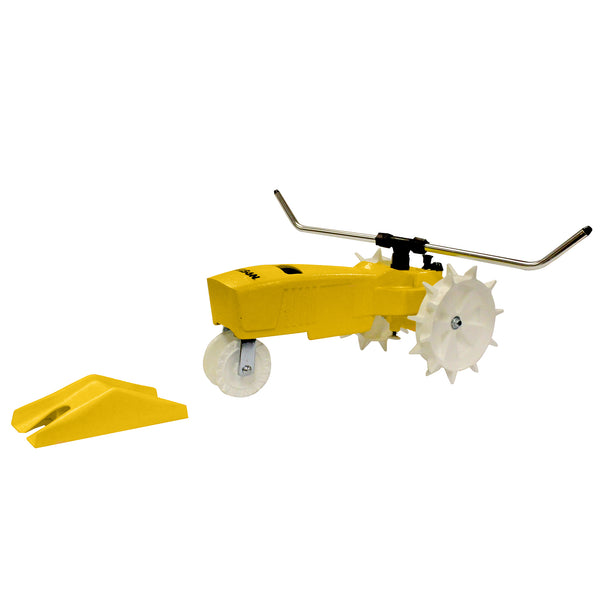
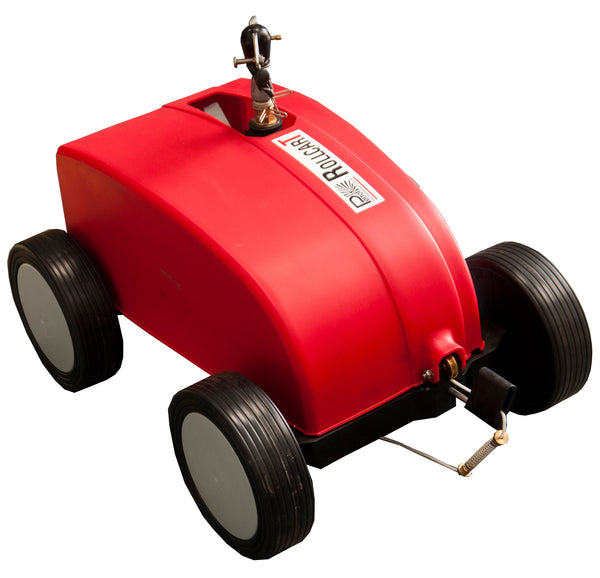
Travelling Sprinklers are a practical choice for sports turf managers who need reliable irrigation without the cost or complexity of a fixed underground system. On football and rugby pitches, cricket outfields, golf fairways, school sports grounds and large amenity lawns, they offer a simple way to apply water across wider areas with far less manual effort than moving a standard sprinkler by hand. For many grounds teams, that balance of coverage, portability and control is exactly what makes travelling sprinklers so useful during dry periods and renovation work.
In day-to-day turfcare, irrigation is never just about getting water onto the surface. We are trying to keep moisture levels more even through the rootzone, reduce plant stress and support a stronger, denser sward. A travelling sprinkler helps with that by moving steadily across the turf and distributing water over a set path. That means fewer dry strips, less guesswork and more efficient watering on areas where hose-and-nozzle work would take too long. As part of a wider irrigation programme, they can make a real difference to surface consistency and grass health.
Why travelling sprinklers matter in grounds management
Natural turf performance depends heavily on moisture balance. When a profile dries out too quickly, grass growth slows, recovery from wear becomes patchy and seedling establishment is less reliable. On the other hand, poor irrigation practice can leave some areas too wet and others still short of moisture. Travelling sprinklers help reduce that problem by giving a more repeatable pattern over a wider working area. They are especially handy on sites where pitches or open spaces need regular watering but do not justify a permanent automated system.
For sports grounds, that flexibility is valuable. A football or rugby pitch may need extra moisture on the wings, across the centre corridor or around recovering goalmouth areas. A cricket outfield may need broader, lighter irrigation to support uniform growth and presentation. Golf and amenity sites often have larger grassed areas where portable watering is the most practical option. In all of these settings, travelling sprinklers allow us to cover more ground with less labour, while still keeping control over where water is being applied.
They also sit neatly between other irrigation options. For smaller, localised work, many teams will still use hose pipes and hand watering. For compact target areas, static sprinklers are often enough. Travelling sprinklers come into their own when we need a mobile solution that can irrigate a larger strip or section more evenly and with less supervision.
How travelling sprinklers work in practice
The principle is straightforward. The sprinkler travels along a hose path while applying water over a defined arc or width. This gives the operator the ability to set up the run, monitor pressure and let the unit cover the chosen area with less manual repositioning. For busy grounds teams, that saves time and helps make irrigation more consistent through long, dry spells. It also reduces the stop-start approach that often comes with moving smaller sprinklers around by hand.
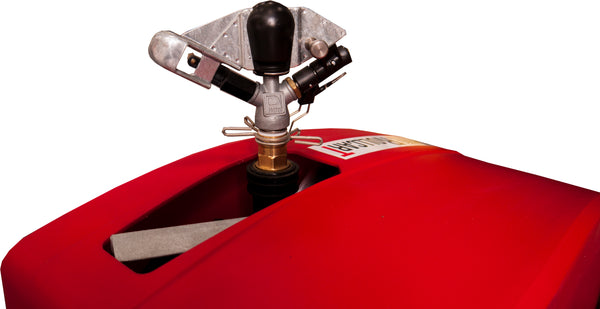
Performance depends on a few technical factors. Water pressure needs to be strong and stable enough to drive the unit properly and maintain a useful spray pattern. Hose quality matters too, because kinks, poor flow or weak couplings can interrupt the run and reduce coverage. That is why travelling sprinklers are commonly used with good-quality hose fittings, connectors and nozzles and tidy storage from hose reels. Those supporting products help the whole set-up work more smoothly and make deployment much easier on larger sites.
Wind, spacing and runtime all need a bit of thought as well. Like any sprinkler, a travelling model will perform best in calmer conditions, usually early morning or later in the day. That helps reduce drift and improves the accuracy of application. Grounds managers also need to think about overlap and travel path so the full area gets sensible, even coverage rather than heavy watering in one strip and dry patches in the next. Used properly, travelling sprinklers can provide efficient water distribution without overcomplicating the job.
Part of an integrated turfcare programme
Travelling sprinklers are most effective when they are used as one part of a broader maintenance plan. Irrigation supports everything from seed establishment to wear recovery and summer presentation. If we are watering a repaired section after renovation, that job often sits alongside hardwearing grass seed to rebuild density and suitable rootzone materials to improve growing conditions. In other words, the sprinkler is not the whole answer, but it helps make the rest of the programme work.
This is especially true during establishment work. Newly seeded or renovated sections need steady moisture if they are to germinate cleanly and recover evenly. Where conditions are drying or exposed, travelling sprinklers can support a more even watering pattern across the area than hand watering alone. That can help reduce patchiness, improve early rooting and support stronger grass cover through important recovery periods. On sites with repeated problem areas, it is also worth combining good irrigation practice with checks on drainage, compaction and soil testing so the underlying cause is not missed.
Seasonal use through the year
Travelling sprinklers are at their busiest from spring to early autumn. In spring, they help settle renovations and support seed establishment as growth starts to build. Through summer, they are especially valuable during warm, drying weather when larger turf areas need consistent moisture to maintain grass vigour and presentation. In early autumn, they still have an important role in post-renovation recovery and overseeding work if conditions remain dry. Winter use is usually more limited, but on mild spells they can still support local recovery work where moisture is needed.
Choosing the right travelling sprinklers for your site
When selecting travelling sprinklers, think about coverage area, available water pressure, hose length, portability and how often the unit will be used. A smaller venue may only need occasional mobile irrigation, while a larger sports complex may rely on travelling sprinklers as a regular part of the watering routine. Durability and ease of set-up matter too, especially when equipment is being moved frequently between pitches or work areas.
For turf professionals, travelling sprinklers are a proven and practical option. They offer wider-area irrigation, reduced labour and more consistent water delivery across natural grass surfaces. Used properly within a joined-up grounds management programme, they help support healthier turf, stronger recovery and better playing quality when moisture control becomes critical.


Recently viewed