


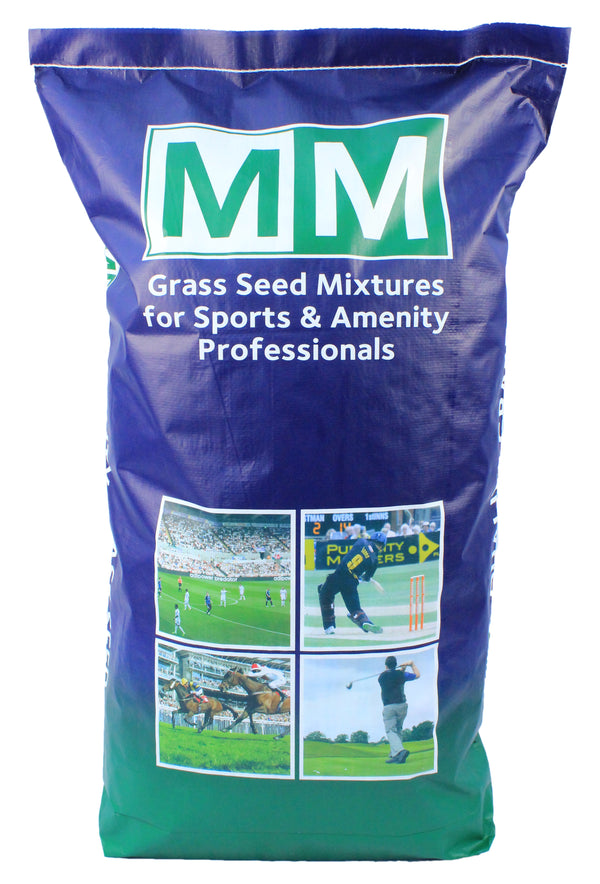


Golf Tees Grass Seed for Wear Tolerance, Recovery and Smart Course Presentation
Golf Tees Grass Seed has one of the toughest jobs on the course. Teeing grounds take repeated divoting, concentrated foot traffic, trolley wear around access points and regular mowing through the playing season. We are not simply trying to establish grass cover. We are trying to build a dense, hardwearing and visually consistent sward that can recover from damage and still look sharp.
That is why golf tee seed selection is different from general amenity seeding. On tees, the priority is usually a blend that establishes reliably, tolerates wear and responds well to routine overseeding. Perennial ryegrass often sits at the centre of that conversation because it offers good germination speed, strong wear tolerance and dependable recovery. Depending on the course style and maintenance input, other fine turf species may also play a part where presentation, density or seasonal performance need balancing more carefully.
This collection sits within the wider Golf Seed range, but Golf Tees Grass Seed deserves its own focus because tees are managed very differently from greens, fairways and rough. A teeing ground has to recover quickly, hold together under pressure and still give golfers a smart, consistent starting point on every hole.
Choosing Golf Tees Grass Seed for Real Course Conditions
Match the mixture to wear, recovery and presentation standards
When we choose Golf Tees Grass Seed, the first thing we look at is pressure: how many rounds the tee sees, how much winter play it carries and how much recovery time is available between periods of use. A busy members’ course, a pay-and-play venue and a lower-traffic estate course can all need different seed strategies. The best blend is the one that fits the actual wear pattern and maintenance resource on site.
Tees have a very specific stress profile. Divot recovery is a major factor. So is the ability of the grass plant to tiller and knit back into damaged areas after repeated use. That is why a seed mixture for tees usually leans more towards wear tolerance and recovery speed than a greens mixture would. Where putting performance drives species choice on the green, teeing grounds are judged more on stability, resilience, ball presentation and visual finish.
That difference is exactly why it makes sense to compare tee seed with Golf Greens Grass Seed and Golf Fairway Grass Seed when planning a joined-up course programme. Greens demand finer texture and closer mowing tolerance. Fairways need broad coverage, clean presentation and dependable recovery over larger areas. Tees sit somewhere between the two: they need the visual standard to match the rest of the course, but they also need enough toughness to cope with concentrated wear.
How Golf Tees Grass Seed Fits into the Maintenance Programme
Overseeding works best when the whole programme supports it
Even very good Golf Tees Grass Seed will struggle if the surface is compacted, dry at the top or sealed with organic matter. Good seed-to-soil contact matters. So does opening the surface before overseeding, whether that is through scarification, sarel rolling, solid tining or more intensive renovation work. If seed sits in the canopy and never reaches the upper rootzone, recovery will be slow and patchy.
This is where practical greenkeeping makes the difference. On tees, we usually get the best results when overseeding follows a realistic workflow: relieve compaction, clean the surface, apply seed evenly, support germination and then protect the new plant as it establishes. Timing is everything. If seed goes down before a dry spell without enough water behind it, or just ahead of heavy play with no recovery window, the take will often disappoint. Good tee recovery is usually about co-ordination as much as product choice.
Nutrition plays a part as well. Young seedlings need access to available nutrient if they are going to root, tiller and build cover before wear returns. The aim, though, is balanced establishment rather than a surge of soft leaf. That is why tee seed work often sits naturally alongside Pre-Seed Fertilisers. Used properly, they help support early rooting and establishment without losing sight of the need for a firm, hardwearing surface.
Moisture management can be the deciding factor. Tee tops dry quickly on exposed sites, especially where the rootzone is sandy or free draining. During germination, that upper layer needs steady moisture if the seed is going to establish evenly. On many courses, dependable Irrigation is what keeps recovery moving after overseeding, while Weather and Moisture Monitoring helps us make better decisions on dry-down, timing and early stress. In practice, that joined-up approach often makes the difference between a tee that recovers cleanly and one that stays open and weak.
Seasonal Use of Golf Tees Grass Seed
Timing affects establishment, recovery and playing quality
Golf Tees Grass Seed is usually used most effectively in spring and from late summer into early autumn. Spring overseeding can help tidy winter damage and build cover before the main playing season gathers pace, provided soil temperatures are moving and moisture is available. Late summer and early autumn are often the strongest renovation windows because soil warmth is still there, recovery conditions are favourable and there is enough time to establish before colder weather slows growth.
In summer, overseeding can still work well, but only if water management and tee use are under control. Newly sown seed on a dry tee top can fail quickly. In winter, active germination is less reliable, so the focus often shifts towards protecting cover, planning repairs and identifying which tees will need more aggressive work when temperatures rise again. That seasonal rhythm matters because tee seed has to fit around golfer traffic, competition pressure and the practical realities of course presentation.
From a course management point of view, tees should never be treated in isolation. They are one part of the golfer’s visual and playing experience from first shot to final green. When the teeing surfaces, fairways and greens are all built around the right seed choices, the whole site feels more consistent. That is why linking Golf Tees Grass Seed back into the wider Golf Seed programme makes sense: it helps you manage recovery, presentation quality and wear tolerance across the full course rather than chasing one problem area at a time.
In simple terms, Golf Tees Grass Seed is about building a surface that recovers quickly, stands up to wear and keeps the course looking sharp from the first tee onward. When we match the seed blend to the level of play, prepare the surface properly and support establishment with sensible nutrition and moisture control, we give teeing grounds a much better chance of holding their quality through the season.


Recently viewed